Audubon of Florida News

Topic: Audubon Chapters, Birding, Birds in the News, Climate Change, Gulf Oil Spill, Volunteer Opportunities


Oil Spill Alert: Bird Stewards Needed at a Beach Near You

Least terns feeding on a Florida beach

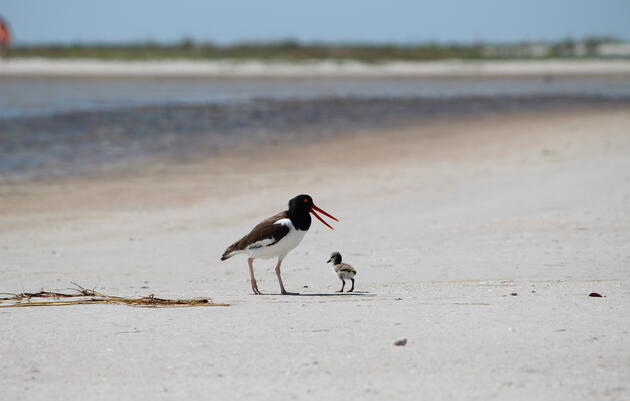
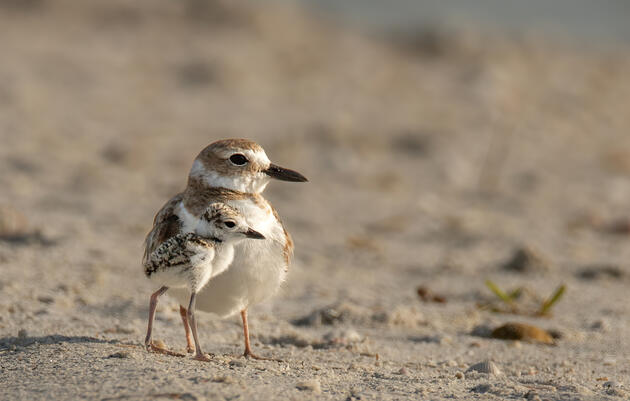
While Floridians hold their breath and wait, hoping the oil spill will spare our beaches, Audubon recognizes the urgent need to ensure our beach-dependent wildlife like nesting terns, plovers and other shorebirds have as successful a breeding year as possible in those areas that are not impacted by the spill. In this way, we hope their successes will help offset the dramatic losses of threatened wildlife that may occur elsewhere in the Gulf.

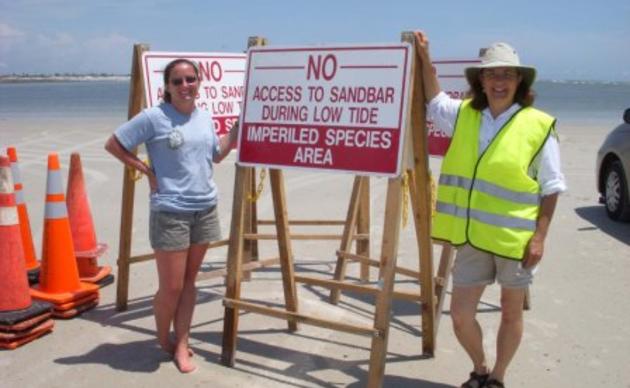
One way to help beach nesting birds is to provide bird stewards–chaperones who volunteer a few hours of their time in a shift on the beach to help ensure beachgoers and individuals preparing for the spill do not enter nesting areas, and help educate beach visitors about these remarkable species.

Increasing bird steward efforts in the following counties now can help us ensure birds in these locations have a better chance of survival: Pasco, Pinellas, Manatee, Lee, Collier, Charlotte, Nassau/Duval and St. Johns.

We are looking for two categories of volunteers. Click on your category of interest to sign up:

1) Bird Stewards will function as site ambassadors for a shift or shifts. We will train you on the bird protections and biology you will need to be successful. These individuals should like spending time on the beach and interacting with the public.

2) Site coordinators will be responsible for scheduling the bird steward volunteers at their sites, to ensure that all shifts are covered. These individuals do not necessarily have to perform beach steward functions as long as all shifts are covered, but should enjoy “organizing” tasks and have the time to dedicate to coordinating shift scheduling.


Duval Audubon Leaders Challenge Oil Drilling off Atlantic Coast

posted on April 22, 2010 in Audubon Chapters, Oil Drilling

oil rig on horizonFrom the Florida Times-Union:

Some of the first public discussions in decades about oil and gas exploration off Florida’s Atlantic coast opened Wednesday in Jacksonville with a small crowd that saw a lot at stake.

The U.S. Interior Department’s Minerals Management Service scheduled two hearings Wednesday about what issues to consider when it studies environmental effects of testing to chart reserves of offshore fuels. As backers of offshore drilling talked up the potential to create jobs and raise tax revenues, people worried about environmental damage warned about damage to endangered species and to clean beaches. Both arguments were leaps beyond the formal reason for Wednesdays hearing, which involved only discussions about how scientists and engineers should identify the areas most likely to be house new power sources.

But the bottom line was really about drilling someday, said both sides in the audience of about 25 people. “I know you’re just talking about seismic exploration. To me, it’s a slippery slope,” said Lesley Royce, a Duval Audubon Society member who warned about wildlife impacts. She and others stressed the importance of Florida coastlines as calving grounds for endangered right whales, warning that noise from acoustic tests could drive sound-sensitive whales away from critical habitat.

She also worried about oil spills and other pollution from any wells that were eventually drilled. “Even though you’re not talking about drilling … I think that’s going to follow,” Royce said. “We don’t want those oil derricks off the coast of Florida.”

There’s probably a lot to drill for, said David Mica, executive director of the Florida Petroleum Council, a trade group. “Developing these resources could translate into thousands of jobs,” he said, calling the Atlantic reserves “essential for our nation’s future energy security.” Mica said billions of gallons of oil and trillions of cubic feet of natural gas are thought to be buried off the Southeast coast, but that new research is needed to define those reserves.

The hearing Wednesday follows President Barack Obama’s decision last month to lift a decades-old moratorium on oil and gas exploration on the South’s Atlantic coast, including the northern half of Florida. The meeting was an early “scoping” step in a process of planning for offshore tests.

A study weighing environmental dangers against possible benefits will be written in draft form by next year, and should be finalized in 2012, said Joe Christopher, regional supervisor for the mineral service’s leasing office in New Orleans. That will become a basis for decisions about what type of testing to allow, and where, which could lead to drilling in some of those sites years later.

Christopher said the research could also be used by companies considering setting up offshore wind-power facilities, because they will need to understand the ocean floor under their sites. Those wind-power facilities might be a good idea, but drilling is “really what we’re talking about, ” answered Jeff Light of St. Augustine, who said that worries him.

It’s been 30 years since much testing was done off the Southeast coast, and newer technology might identify conditions that would have been missed then, said Jim White, who chairs the International Association of Geophysical Contractors, a Texas-based trade group.

Hearings similar to those Wednesday are scheduled in Georgia, the Carolinas, Virginia and New Jersey this month.

Bird-Shooting Chargess, Environmentalists Lay Out Right Case for Prosecution

From NaplesNews.com:

Kudos to a trio of environmental protectors for putting into words our feelings about a notorious bird-shooting incident in February 2009 off Goodland.

After the Southwest Florida State Attorney’s Office declined to bring charges because the vicinity lacked clear public notice signs, a federal grand jury has stepped in to indict five of the seven young adults originally charged with shooting at least 21 birds of protected species.

Eric Draper of Audubon of Florida, Ed Carlson of Corkscrew Swamp Sanctuary and Brad Cornell of Collier County Audubon Society say in a letter to the editor that the U.S. Fish and Wildlife Service and the Florida Fish and Wildlife Conservation Commission deserve credit for the follow-up investigation that led to the indictment against the five, including four Navy officers in training.

“Audubon strongly concurs with the enforcement action taken, as it sends the clear message that such wanton killing of protected wildlife will not be tolerated. We hope that any convictions and punishment will result in this lesson being learned by those who aspire to lead our national defenses as well as by the general public and will not result in bitter resentment over just a bunch of birds,” their joint statement says.

“Audubon started working in Florida more than 100 years ago to protect the threatened wading birds from slaughter by plume hunters. Today, there are many more threats to the health of Florida’s bird populations, and it is in everyone’s best interest to respect and protect them.”

The case is not and never was about revenge against the alleged shooters. It is and always has been about protection of wildlife and community standards.

Next stop — federal court, where all sides can be heard in full.

Eaglet Injured in Collapse of ‘Hoover’s Nest’ in North Pinellas

From the St. Petersburg Times:

It could have been a predator in the night, or simply young eagles bickering and hefting their growing weight around inside the nest. Whatever the cause, Pinellas County eagle nest No. 20 collapsed Sunday morning, sending one of the three chicks inside plummeting to the ground, leaving it severely injured.

Nest No. 20 became known as “Hoover’s Nest” in February after volunteers with the Florida Audubon Society put an orphaned eaglet named Hoover inside, along with the two chicks and the adult bald eagles already living there. Even with the addition of Hoover, the nest appeared to be thriving — until Sunday.

“The nest fell down, and we don’t know if it’s Hoover or not,” said Pinellas County Audubon Society coordinator Barb Walker. The eagles are around 8 weeks old and almost indistinguishable from one another, covered with dark brown feathers. All three of the chicks are still a few weeks shy of growing the type of feathers necessary for flight, but still are big enough — larger than most roosters — to hop around on their own.

Arno Beken, who lives in the house below the tree, said he checked on the nest Saturday night and it appeared intact. Sunday morning, however, neighbors saw there were only remnants of the structure between branches of the 60-foot pine, and called the Suncoast Seabird Sanctuary in Indian Shores.

Christina Kugeares, a bird rescuer with the sanctuary, arrived and found the injured bird in a grassy area near bushes and a chain-link fence. The bird did not put up much struggle as a beach towel was cast over it and it was scooped up by Kugeares. The extent of the bird’s injuries was revealed when it arrived at the sanctuary around 10 a.m. “It’s not doing too well. We’re just trying to save a life. It’s in poor condition,” said Michelle Simoneau, the sanctuary’s spokeswoman.

Volunteers are planning to transport the injured eaglet to the Audubon Bird of Prey Sanctuary in Maitland, one of the best facilities in the state for treating injured eagles. Simoneau said the bird suffered damage along the left side of its body and may have internal injuries.

For the other survivors of the collapse, life went on — albeit from a far more precarious perch. Eagle watchers reported the parents feeding the two eaglets inside the nest’s remnants Sunday. With most of the nest in a pile on the ground, however, the still-flightless eaglets are at more risk of falling or being knocked to the ground by winds or each other.

Joe Zarolinski, a birdwatcher who checks on the nest almost daily, said in recent weeks, parts of the nest, which was about the same size and weight of a small sofa, appeared to be sagging.

Support Audubon’s Legislative Efforts: Make Your Birdathon Pledge Today!

posted on April 2, 2010 in Audubon Chapters, Birding, Calendar, Online Advocacy, Wildlife

birdathonIt’s that time of year again—Birdathon—when Audubon staff and friends put our binoculars where our mouths are (well, not literally) and get back to our birdwatching roots. For those not familiar with this traditional Audubon fundraiser, we spend the day—from before sun-up to after sundown—beating the bushes for every species of bird we can possibly identify. What we ask of you is to throw down a gauntlet for us: sponsor us at a set amount or for a bigger challenge, an amount per species—making us earn every penny in exchange for Hooded Warblers, Brown-headed Nuthatches, Bald Eagles and more.

This year, our whirlwind “Big Day” is planned for SATURDAY, APRIL 10, and here in Tallahassee we hope to see between 130 and 160 species (weather, migration and stamina willing!). Your pledge will not only egg us on (pun intended), but will help support core Audubon of Florida policy work.

pledgeWhether it’s 2 cents or $2 a bird, every pledge can help make a difference for Florida’s natural resources (and is tax-deductible to boot). Pledge now via email, and we’ll let you know the week of April 12th how our team fared, with all the juicy details!

Birding Along the Emerald Coast

Many people visit the Emerald Coast of Florida for its white sands beaches, but as The Weather Channel’s Mike Bettes reports another popular thing to do is bird watching. Visit Choctawhatchee Audubon for information about birding along the Emerald Coast.

Audubon’s Northeast Florida Birdathon

linda martino dave macri
Royal Tern © Linda Martino and Least Tern © Dave Macri

Thanks to Audubon this Royal Tern chick at Huguenot and this Least Tern chick at Fort Matanzas had a better chance of fledging this year. Let’s celebrate!

Join us on Saturday, April 10th for the
First Annual Northeast Florida Bird-a-thon
Our Goal – find at least 150 bird species.

Let’s celebrate our accomplishments in the region and
Audubon of Florida for their support in NE FL.

Your $20 donation includes:
•    participation in the Bird-a-thon (see The Rules below)
•    picnic hamburger/hot dog lunch (by Chef Ned)
•    entry into the prizes drawing (one free ticket)
and will benefit bird conservation in Northeast Florida!

The day will start with Birding Teams finding as many species as possible. Teams will head out at or before sunrise and meet at the picnic by 1:30 to have their checklists included in the totals.

For those not inclined to the birding at sunrise, you can still join us for the picnic! For more information on the birdathon and picnic, please see the flyer.

To participate, please RSVP to Monique (904.813.5115).

2010 Northwest Florida Birding Festival

posted on March 23, 2010 in Audubon Chapters, Birding, Calendar

Logo

April 16 & 17, 2010
RiverCamps Riverhouse

tickets

Northwest Florida’s Gulf Coast provides important resting and feeding habitat for many species of migratory and rare resident birds. In celebration of International Migratory Bird Day, we invite you to attend this spectacular birding festival that highlights some of the most beautiful areas and rarest birds of the region. The festival includes guest speakers, a wildlife photographer, education and recreation activities for all ages and numerous guided birding tours. Please join us for the Northwest Florida Birding Festival at RiverCamps on Crooked Creek and experience the wonders of migratory birds. View the festival’s poster for more information on activities and events.

If you would like more information, please call 850.231.6433. Map of festival can be found here.

st. joe usfws ufpcbcc fwc bay

Big O Birding Festival

posted on March 17, 2010 in Audubon Chapters, Birding, Calendar, Wildlife

big-o

The Big “O” Birding Extravaganza is a Glades/ Hendry County cooperative event in South Central Florida on the Southwest shores of Lake Okeechobee, the state’s largest lake and it’s happening from March 25th until March 28th.

Glades and Hendry counties are becoming a mecca for bird watching; they’ree home to more than 300 species of birds, including limpkins and migratory swallow-tailed kites, and painted buntings which pass through during October and April. Five Great Florida Birding Trail sites are within the region: Dinner Island Ranch and Okaloacoochee Slough State Forest and Wildlife Management Areas, and Stormwater Treatment Area #5 (STA5) are in Hendry County, and Fisheating Creek Wildlife Management Area—East & West are in Glades County. You can expect to see ducks such as the Fulvous Whistling-Duck and the Mottled Duck; shorebirds like Black-necked Stilt; waders such as Roseate Spoonbill, Wood Stork and Least Bittern; and specialty raptors including Crested Caracara, Snail Kite, Short-tailed Hawk and Barn Owl. Plus, they’re always on a quest for that elusive Smooth-billed Ani. Go help them look! More information on the festival here.

Choctowhatchee Audubon Joins the Mass of Communities, Local Governments and Businesses Opposed to Oil Drilling

posted on March 12, 2010 in Audubon Chapters, Oil Drilling

Last week, Choctawhatchee Audubon Society passed a resolution opposing the opening of Florida’s waters to oil drilling. Choctawhatchee joins the ranks of a massive crowd of Florida communities, governments, businesses, and organizations opposed to allowing oil drilling to occur in our state’s waters. Good work Choctawhatchee!

Surfing Open

WHEREAS, the Choctawhatchee Audubon Society is a conservation-based organization dedicated to the preservation of the natural environment for the benefit of wildlife and mankind and  represents over 400 members from Okaloosa, Walton and Santa Rosa counties, Florida; and

WHEREAS, our beaches, nearshore Gulf of Mexico waters and adjacent estuaries are noted as world-class attractions for their scenic and natural beauty, and are critical to our region’s tourism and fishing industries; and

WHEREAS, a quality natural environment is essential to the survival of our region’s marine and estuarine wildlife.  Especially at risk are shorebirds that include the imperiled Snowy Plover, Piping Plover, Black Skimmer and Least Tern; sea turtles including the Green, Kemp’s Ridley, Hawksbill and Loggerhead; and mammals including the Choctawhatchee Beach Mouse plus species that sustain our commercial and recreational fisheries; and

WHEREAS, the area with the potential for the greatest risk of environmental damage from oil extraction, due to the prevailing sea breezes and Gulf Loop countercurrent, is the eastern part of the Gulf of Mexico, off the Florida Panhandle; and

WHEREAS, environmental specialists contend the major risk from drilling platforms is the wastewater they routinely discharge which contains drilling fluids and heavy metals including mercury; and

WHEREAS, according to Oil Industry data, an oil rig in the Gulf of Mexico can dump up to 90,000 tons of drilling fluid and metal cuttings over its lifetime.  These contaminants accumulate in the marine food web and may contaminate local beaches and have a negative effect on the environment and the tourism industry; and

WHEREAS, it is our belief that despite technological advances in oil drilling technology, there is no positive assurance that catastrophic damage to our coastline, beaches, plant and fish life could be avoided during normal operating conditions or during storm situations; and

WHEREAS, lifting the moratorium on mineral leasing in the Gulf of Mexico poses an intolerable threat to the beaches, natural environment, economy of Florida, and national security:

THEREFORE, BE IT RESOLVED by the Board of the Choctawhatchee Audubon Society that we urgently request that all elected officials at the County, State and Federal levels oppose legislative attempts to allow offshore oil drilling expansion past the areas already approved for pre-leasing, leasing and oil production activities and to take immediate steps to encourage and assist in the development of alternative sources of energy.

Next »