Audubon of Florida News

Important Beach Tips for Memorial Day 2013

posted on May 23, 2013 in Coastal Conservation

holidayweekendbeachtips

Click to enlarge.


WFSU Audio: Beachgoers, Look Out For Baby Birds, Audubon Says

Black Skimmer and Chick by Bonnie Shedd

Audubon’s Director of Wildlife Conservation Julie Wraithmell was profiled in this audio essay from WFSU Public Radio in Tallahassee about the upcoming Memorial Day holiday and what beach-goers can do to protect Florida’s most vulnerable coastal wildlife.

From WFSU Radio:

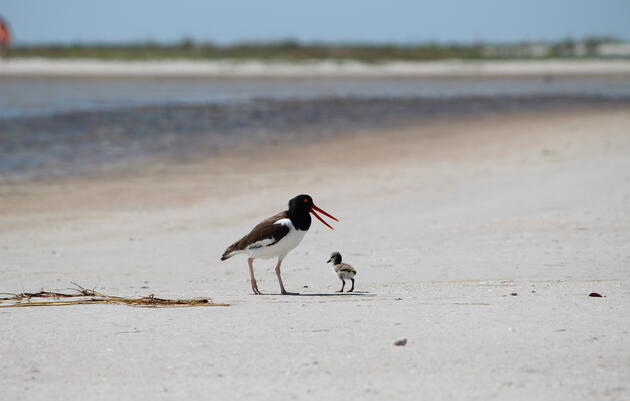
Many beach-dwelling birds make their nests in the Florida sand. And when threatened species, like the least tern, hatch, Julie Wraithmell, with Audubon of Florida said, “They’re basically these little fluff balls on legs that are scrambling around the beach.”

Listen to the full broadcast by clicking here.

May 17 Key Largo Gulf Consortium Meeting Wrap-Up

SpoonFlight_LarryFrogge

Audubon was well represented at the May 17 Florida’s Gulf Counties Consortium meeting in Key Largo, where the Consortium heard updates on the agreement with the Governor’s Office and the Gulf Council restoration plan.  Gov. Scott is expected to sign the agreement which will define the role of the Governor’s Office and state agencies in working with the Consortium to develop Florida’s Oil Spill Restoration Impact Allocation Plan. Also known as the State Expenditure Plan, the plan will determine how “Pot 3” RESTORE funds are spent. The State’s plan must be approved by the Gulf Coast Ecosystem Restoration Council.

pete_presentation_keylargoPete Frezza, a research manager at Audubon’s Everglades Science Center in Tavernier, gave an insightful presentation on some of the problems facing Florida Bay, an important habitat for Florida’s wildlife and the larger Gulf ecosystem. Click here to see a copy of Pete’s presentation.

The Consortium also established a committee of the 15 counties from Jefferson to Monroe County to provide input on U.S. Treasury options on how to distribute Pot 1 RESTORE funds among the 15 counties.  A similar committee for the eight counties from Escambia to Wakulla was set up earlier.

Consortium members were briefed on the Florida Keys marine environment and how much influence Keys fish populations and other Keys resources have on other areas in the Gulf of Mexico.

Supervisor Connie Rockco, Harrison County, Missisippi Board of Supervisors, made a presentation and commented on how much coastal Mississippi has in common with coastal Florida.  She advocated for the formation of a Gulf state coastal consortium to exercise more influence with Congress on Gulf coastal issues.

All presentations made at the meeting are posted on the Florida Gulf Consortium web site.

Many of Florida’s Gulf coastal counties have formed advisory committees to help shape local priorities for Gulf restoration funds.  Your participation in these committee meetings is important to guide local restoration funds to critical Gulf environmental resources and wildlife.  If you have information on your local committee meetings, please email jwebber@audubon.org so that it can be included on Audubon’s RESTORE Calendar.

Audubon Center for Birds of Prey Receives Grant in Support of Eagle Rehabilitation

posted on May 21, 2013 in Birds of Prey Ctr.

SeaWorldVisitIt felt like a homecoming when staff members from SeaWorld-Orlando, Busch Gardens-Tampa and Busch Gardens-Williamsburg visited the Audubon Center for Birds of Prey and several of our eagles.

Three Bald Eagles, which were unable to be released, were transferred to Busch-Gardens in Williamsburg, Virginia last week for their new eagle exhibit.  Two adults and one juvenile are now residing at the over 100 acre Busch-Gardens theme park.

“All three Bald Eagles are eating well and appear to have settled in nicely as they continue to explore their new home,” states Jay Tacey, Manager of Zoological Ops at Busch Gardens, Williamsburg.

20130509_083546

Each of these birds were admitted to the Center’s Raptor Trauma clinic at the end of 2012 with injuries that prevented them from being released.  They will now serve as education ambassadors for Busch-Gardens.  The Center places many of our non-releasable birds around the country with zoos and other organization for use in education and exhibits. The Center has placed several Bald Eagles and one Crested Caracara at SeaWorld parks in Orlando and Tampa, which are now part of their conservation programs.  SeaWorld’s Tampa and Orlando team spent some additional time meeting and assessing two non-releasable young Bald Eagles as possible ambassador birds for the Conservation Fund in California.

swbgcf 001

Earlier this week, the Center was excited to announce a $20,000 grant from the SeaWorld & Busch Gardens Conservation Fund! The Conservation Fund has been supporting Audubon Center for Birds of Prey since 2004, when the fund began.  This grant supports the Center’s Eagle Rehabilitation programs.

Thank you to our partners and supporters from SeaWorld. 


Gulf Council Draft Plan Release Imminent

posted on in Gulf Oil Spill

100506-N-4281P-001The Gulf Coast Ecosystem Restoration Council is expected to release the draft of its Initial Comprehensive Plan for restoration of the Gulf within the next two weeks.  This plan will guide how the Council’s RESTORE funds (“Pot 2”) will be spent. Once the draft plan is released, Audubon will post it on its RESTORE Florida’s Gulf web page.

Due largely to the delay in the publication of U.S. Treasury rules that will control spending of RESTORE funds, the draft plan reportedly will not include a project list.  The criteria for selecting Council projects will also not be complete.  This will give the public an opportunity to substantially influence the plan’s final content.

A series of public engagement sessions around the Gulf are being set up.  One session will be in Pensacola, FL on June 3.  Another will be held in the St. Petersburg, FL area.  Details will be posted on Audubon’s RESTORE Calendar as they are released.

The large public turnouts and the well-reasoned comments at Florida’s previous public engagement sessions impressed the Gulf Council staff.  Your continued involvement at public meetings and your written comments are important to ensure Florida’s birds and coastal areas will receive the attention and project funding they deserve.

After public input, the Initial Comprehensive Plan is scheduled to be published on July 6.

Audubon Urges Governor Scott to Veto SB 682 – Fossil Fuel Combustion Products

posted on May 17, 2013 in State Government,Water Issues

Wetlands by Chad JohnsonDuring the Florida Legislative session, Audubon tends to focus on those bills that relate to water policy, land conservation, wildlife issues, etc. Every now and then, a bill will surface that demands a harder look and results in an issue of true concern. Such is the case with SB 682, a bill relating to Fossil Fuel Combustion Products…or coal ash as it is also known.

Florida has a total of 16 coal-fired power plants that are located throughout the state. Industry proponents pushed hard to exclude the disposal facilities at these plants from statutory provisions on hazardous waste landfills as they worried about an expected ruling from the Environmental Protection Agency regarding how coal ash will be classified and regulated. The desire of the industry is to use this waste “beneficially” and to not have to dispose of it.

The main problem with the bill is the over-reach that occurs as various “beneficial uses” are allowed with little or no input from the Department of Environmental Protection.

So how does that impact the birds, you ask?  

wetlandsTake for example, the Seminole Generating Station in Palatka. This is an active waste cleanup site where improper handling of coal ash resulted in ash being placed in nearby wetlands and causing extensive damage. Recognizing that things like this happen, the bill requires that coal ash used in the loose form of pavement aggregate must be at least 15 feet from the nearest wetland. People can be affected too as improper placement of coal ash, when used as fill material, can contaminate groundwater. The problem is that no one is given responsibility to ensure requirements for setbacks and other criteria are met and likely no compliance programs will address this either.

Given the high priority that Audubon places on the protection of wetlands, habitat and our water supply, we have sent a veto request to Governor Scott.

Click here to download Audubon’s letter to Governor Scott.

Audubon Engages Students to Learn More About Shorebirds

A1A May 2013 Learning about terns pooping on predators crpd“Ewwwws!” and Grimacing Faces: 

Audubon’s Monique Borboen explains to fourth graders how Least Terns will poop on anybody getting too close to their nest! Effective at keeping predators at bay, isn’t it?

Thumbs up: yes, people and birds can share the beach if beach visitors respect nesting areas and walk around flocks of birds. Wide eyed faces and surprised looks: the Audubon presenter lifted the Least Tern decoy revealing three eggs – yes not all birds nest in trees, some lay their eggs right on the sand of the beach!

Over 100 St. Johns County 3-5 graders learned about shorebirds and seabirds at the Audubon Florida booth during Scenic A1A Kids Ocean Day. For 15 minutes, each class learned the beach is vital habitat for birds and, thanks to the Audubon Adventures Sharing our Shores unit, discussed the dos and don’ts around birds of the shore.

A test of their knowledge during a thumbs up/thumbs down (true/false) session revealed that, like so many adults, they didn’t know parent beach birds stayed on their eggs and chicks to keep them cool – the Florida sun is so hot that it can kill in twenty minutes of exposure. Many did not realize that birds standing on one leg at the water’s edge with their head tucked under their wing were actually sleeping, but the students left promising to walk around the birds to let them sleep (and feed) undisturbed. Trash on the beach was a unanimous don’t but it took some explanation to convince all that cleaning up the seaweed (wrack) was also a don’t. Everyone agreed that following a few simple guidelines we can “share the shores” with the birds.

Education is the first step in conservation so please help us spread the word. And do not be concerned: the eggs in the sand box model of a beach-nesting bird site weren’t real, just jelly beans with dots added!

A great day on the beach with young learners!

Take Action: Southwest Florida’s Conservation Lands Need You

bearsSFWMD Evaluating 62,000 acres of conservation land for surplus in Lee, Hendry, Glades, and Collier Counties.

The South Florida Water Management District (SFWMD) is assessing whether to retain or declare surplus and sell over 62,000 acres of conservation land in Southwest Florida, including lands in Lee, Hendry, Glades and Collier Counties. The lands involved include water management, project, and Conservation lands bought under the Florida ForeverPreservation 2000, and Water Management Lands Trust Fund programs.

A number of the properties being reviewed are located near or adjacent to Audubon’s Corkscrew Swamp Sanctuary, such as the “Corkscrew Regional Ecosystem Watershed” (CREW) and lands in the Ockaloacoochee Slough.

sfwmd_swflorida_surplusmap

Also up for evaluation are lands purchased for water quality projects, including the C-43 Reservoir site, the Caloosahatchee Water Treatment and Testing Facility tract, and a string of properties along the Caloosahatchee river including mangrove and other wetland islands and peninsulas within the river floodplain itself.

SFWMD is seeking public comments on the value of retaining these lands for conservation, and other water management purposes.

The deadline to submit comments is May 28, click here to take action right now.

Maps and detailed material on each property up for consideration are available at the District’s Web Site, found by clicking here.

All concerned with the continued conservation and protection of these lands should submit comments or attend the public meeting (date and time below) and make comments in person. Because SFWMD has put all of its properties in the area “on the table” for review, those lands which seem ignored by the public in this review may eventually be targeted as “potential surplus” by SFWMD. Comments in favor of retaining land in conservation are urgently needed

SFWMD has noticed a public meeting in the area to listen to comments from the public and environmental organizations:

Audubon Advocates Make a Difference for Pasco County

triher_photoPasco County channel would have destroyed nearly 30-acres of vital bird feeding areas.

Last year, we asked you to take action on an important dredging issue off of Pasco County that would have destroyed nearly 30 acres of important seagrass habitat.

Today, we are happy to report that in a resounding “NO“, the U.S. Army Corps of Engineers, Jacksonville District has denied this huge dredging permit.

The project was disguised as a proposal to provide recreational access to a county park, but in reality was primarily intended to benefit the “Sunwest” Development of Regional Impact (DRI), which proposes a waterfront community of condominiums and marinas surrounding a deep mine excavation. The landowners and developers had envisioned connecting with the channel to allow access for large boats.

Your emails to the Corps of Engineers in response to our appeal for help made a huge difference. The Corps of Engineers received over 9,000 individual objections to this permit, many of which were from Audubon Advocates like you.

This proves once again that your individual opinion can count and result in important decisions to protect Florida’s natural resources! Thank you.

Environmental Regulation Bill Heads to Governor Scott

posted on in State Government

tall capitolFor the third year in a row, the Legislative session featured an all-encompassing environmental regulation reform bill. The pattern is always the same. The bill starts out as a large collection of bad ideas and gets whittled down as reactions are registered and issues are worked out.

Last year, Audubon was able to eliminate a threat to the Biscayne Bay Aquatic Preserve as HB 503 passed. This year we tripled that success rate with HB 999 and were able to remove a dangerous definition of the “mean annual flood line“, a local government pre-emption of wetlands regulation for Chapter 298 Drainage Districts, and a last minute attempt to include a fertilizer moratorium.

takeaction_econ_big

The charge to remove the Chapter 298 Drainage District exemption is a stellar example of how advocates like you can make a difference. The driver behind the proposed exemption centered on the Ranger Drainage District in Orange County and a long standing dispute over permitting requirements and restoration plans. Once this issue was explained in the very real terms of lessening protection of the lands surrounding the Econlockhatchee River (and subsequently the St. Johns River), the reaction of many Legislators changed.

We extend our appreciation to Rep. Linda Stewart (D-Orlando) for her relentless pursuit to address this issue in the House with the bill’s sponsor, Rep. Jimmy Patronis (R-Panama City.)

But over in the Senate, it was people such as the sponsor of companion bill SB 1684, Senator Thad Altman (R-Melbourne) who shined by removing this exemption from the bill and Senator John Thrasher (R-Jacksonville) who sent a strong message that the language needed to stay out of the bill. Audubon advocates helped in that process when you responded to our alerts and sent those emails and made your phone calls. We call that success!

wood_stork_mr_cleanIt is true there are still many provisions left in HB 999, such as limitations on the local government permitting process for development projects, creation of new general permits for mooring fields, reduced lease fees for docks and marinas, exemptions for man-made farm ponds from wetland permitting, etc…, but all of those provisions started out much worse and both bill sponsors were receptive to improving the language to lessen impacts. Our success came with removing the worst of the provisions from HB 999 and for that, Audubon will not be requesting a veto of the bill from Governor Scott.

As always, stay tuned to this blog and our Facebook Page for the latest from Tallahassee. Thank you Advocates!

Next »